Most synths make you choose a lane. Hybridwave doesn't. Every one of its six oscillator slots can independently run any of nine synthesis engines — Subtractive, Wavetable, FM, Granular, Additive, Sampler, Phase Distortion, Wavefolding, or Physical Modeling — mixed, layered, split across the keyboard, or crossfaded by velocity, all in a single patch.
Platform: macOS (Apple Silicon) at launch. A Windows version is coming soon. Not currently compatible with Intel Macs, iOS, Android, Linux, or ChromeOS.
Single-user license · Activate on up to 2 computers · See EULA
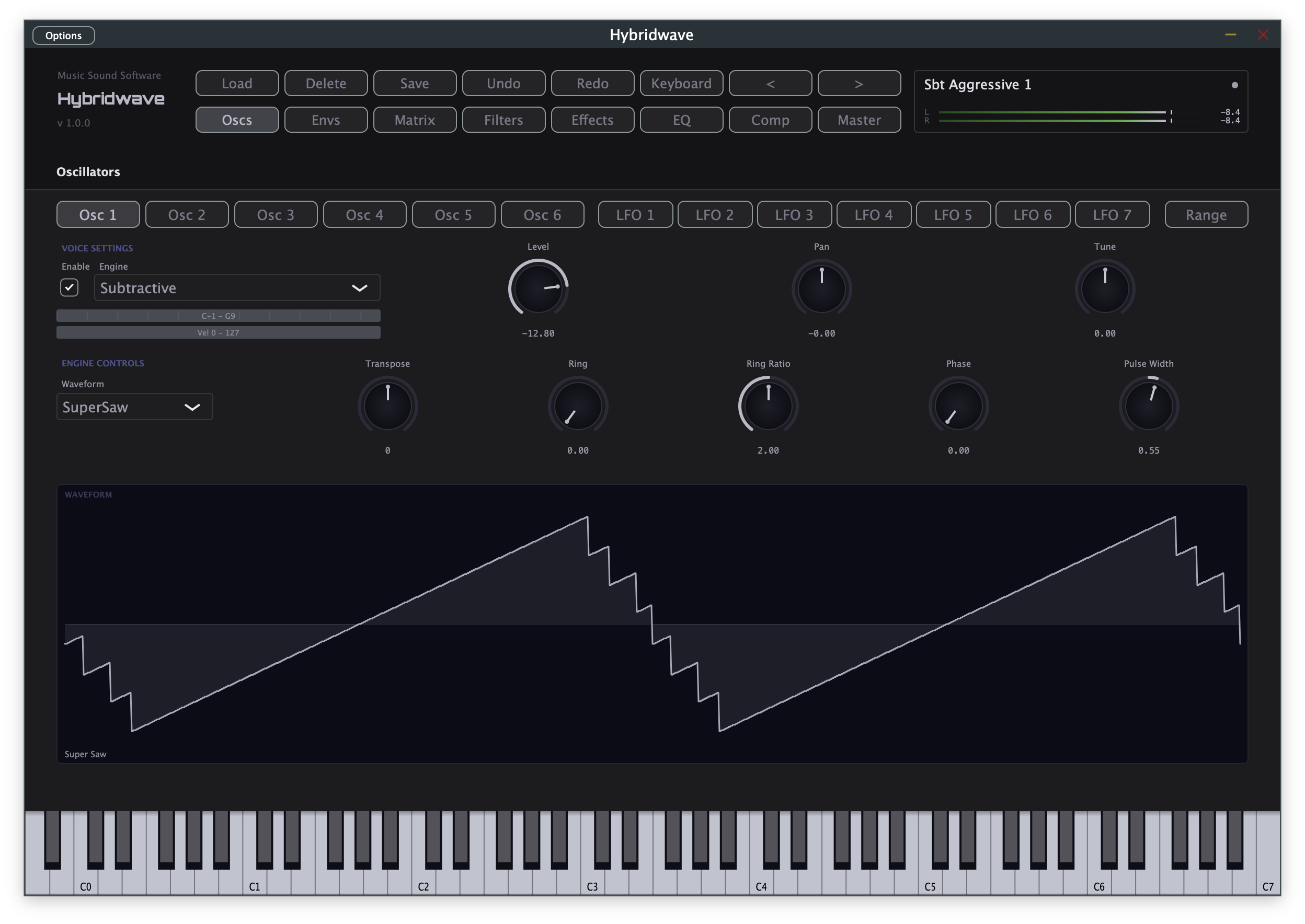
Hybridwave gives you six independent oscillator slots. Each slot can host any of the nine engines below — layered, split across the keyboard, or crossfaded by velocity.
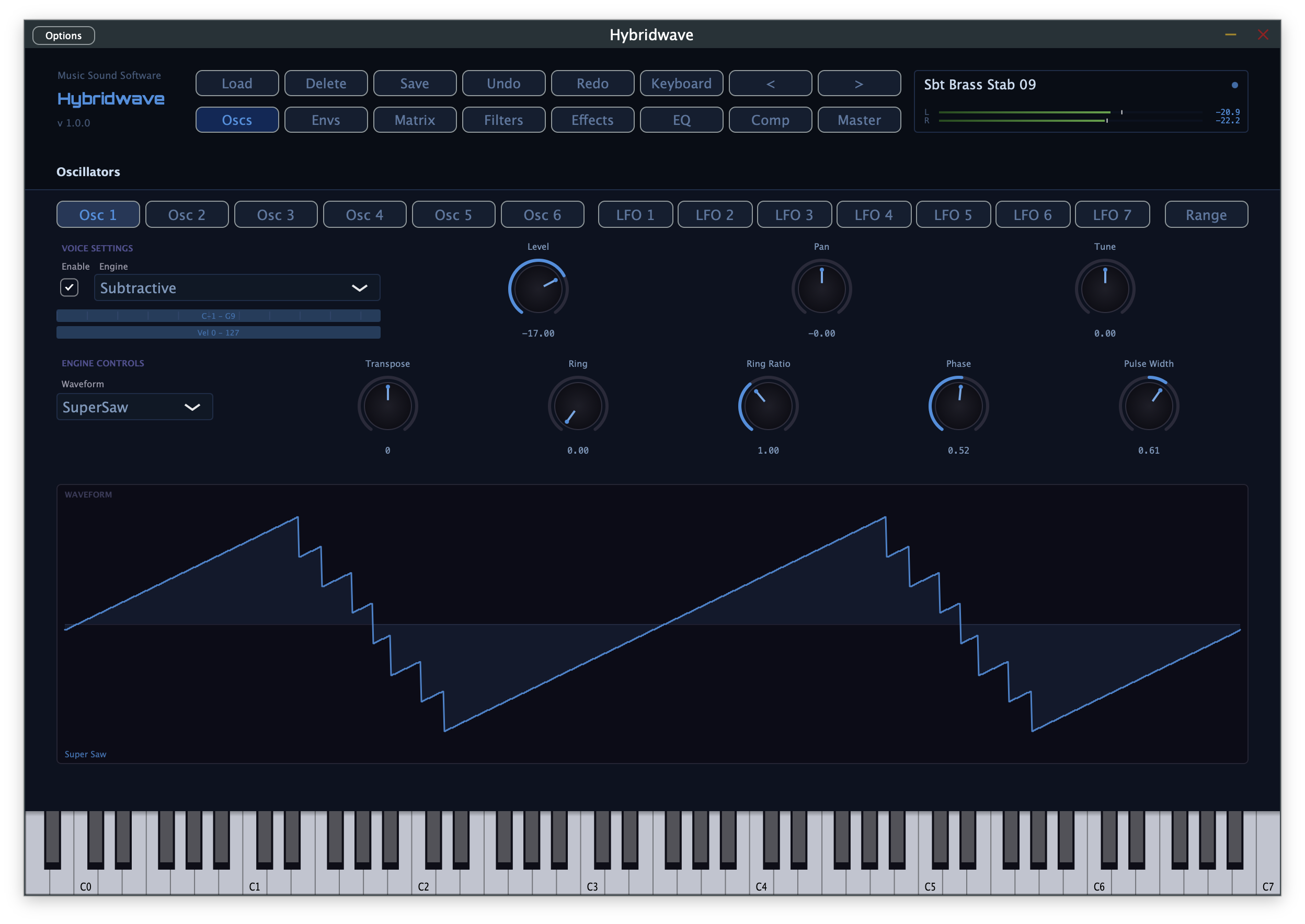
Seven waveforms including SuperSaw and variable pulse width, plus ring modulation. A familiar, predictable starting point.
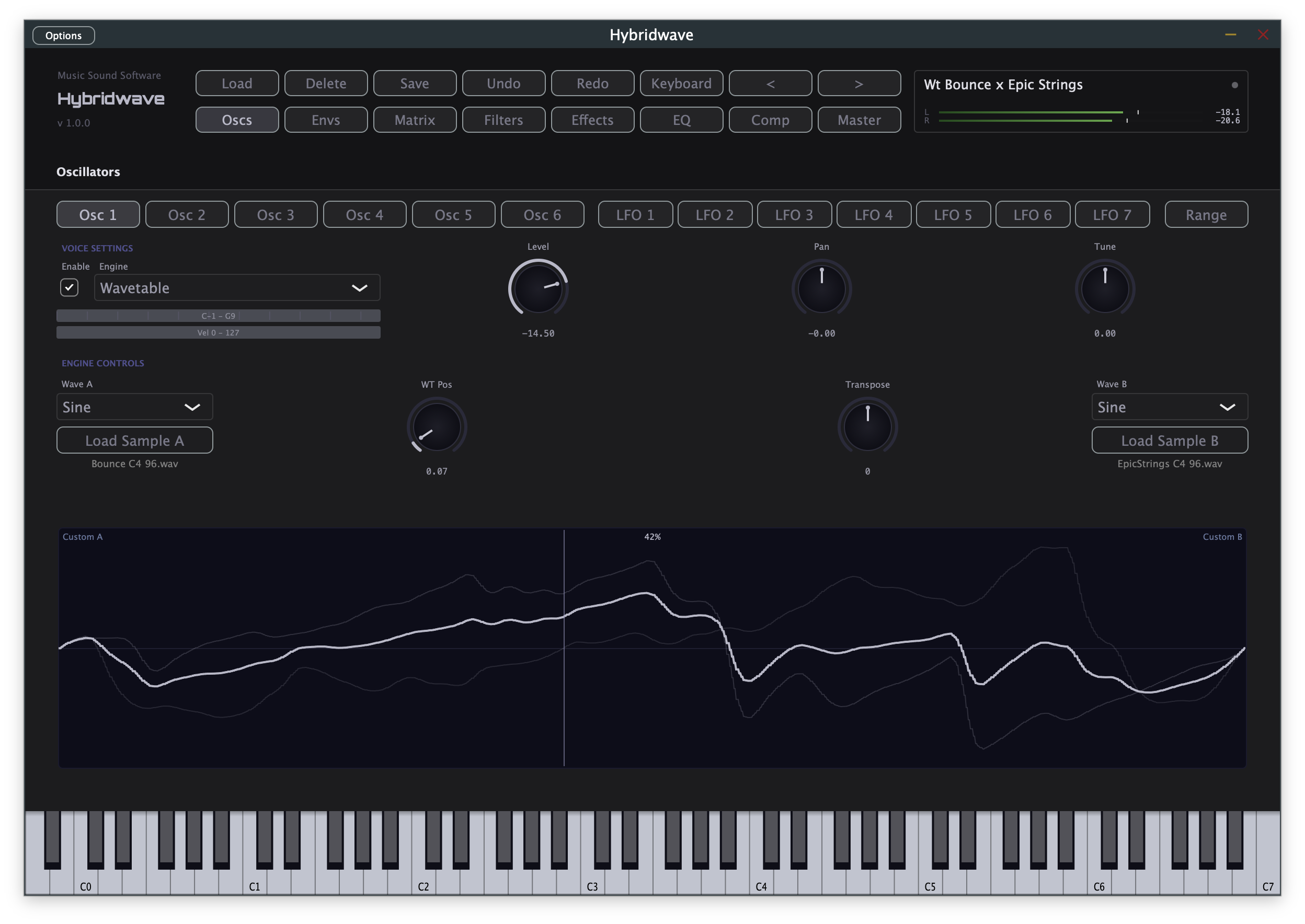
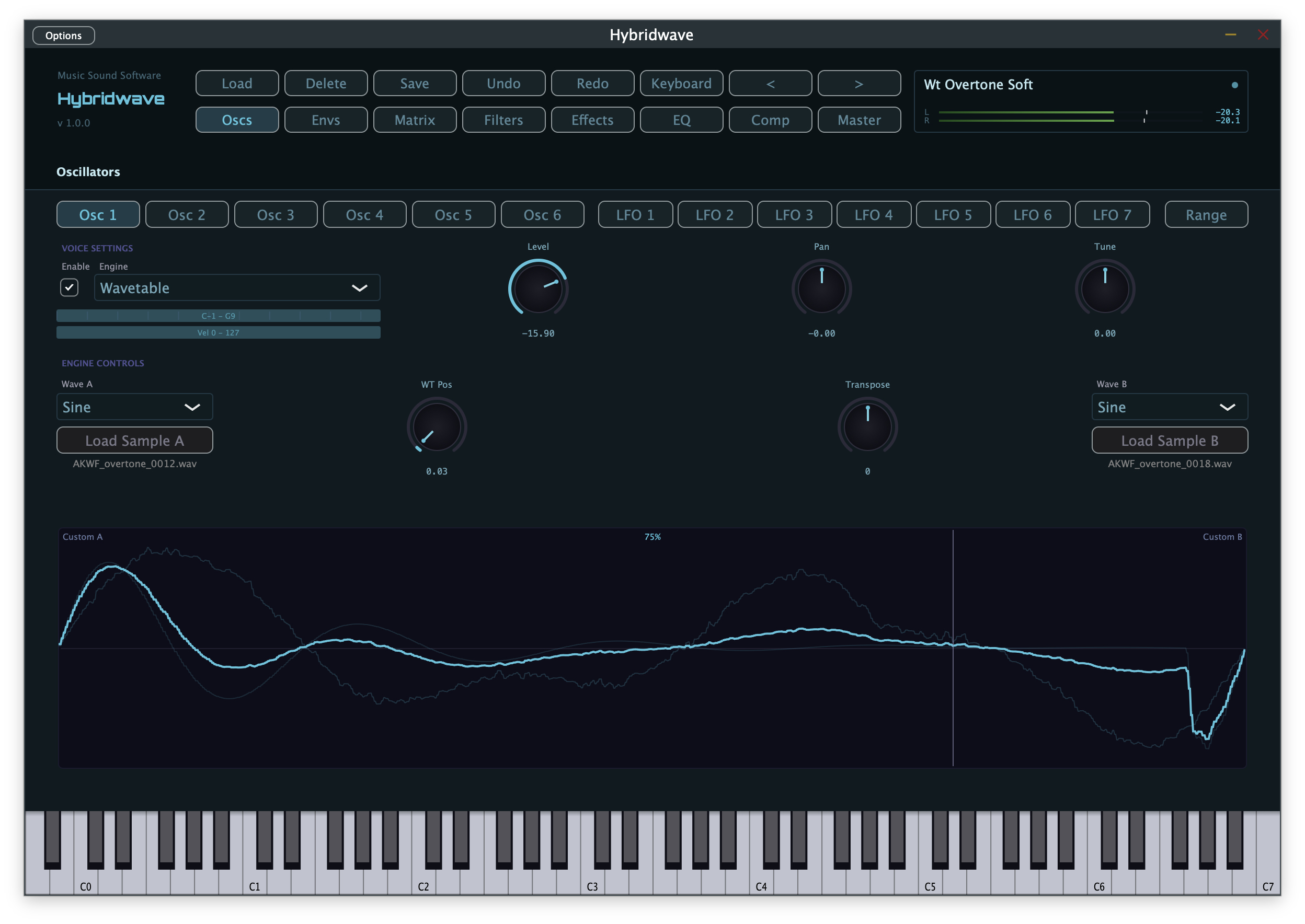
Dual wave slots (A/B) with continuous, modulatable morphing, and custom sample import for your own tables.
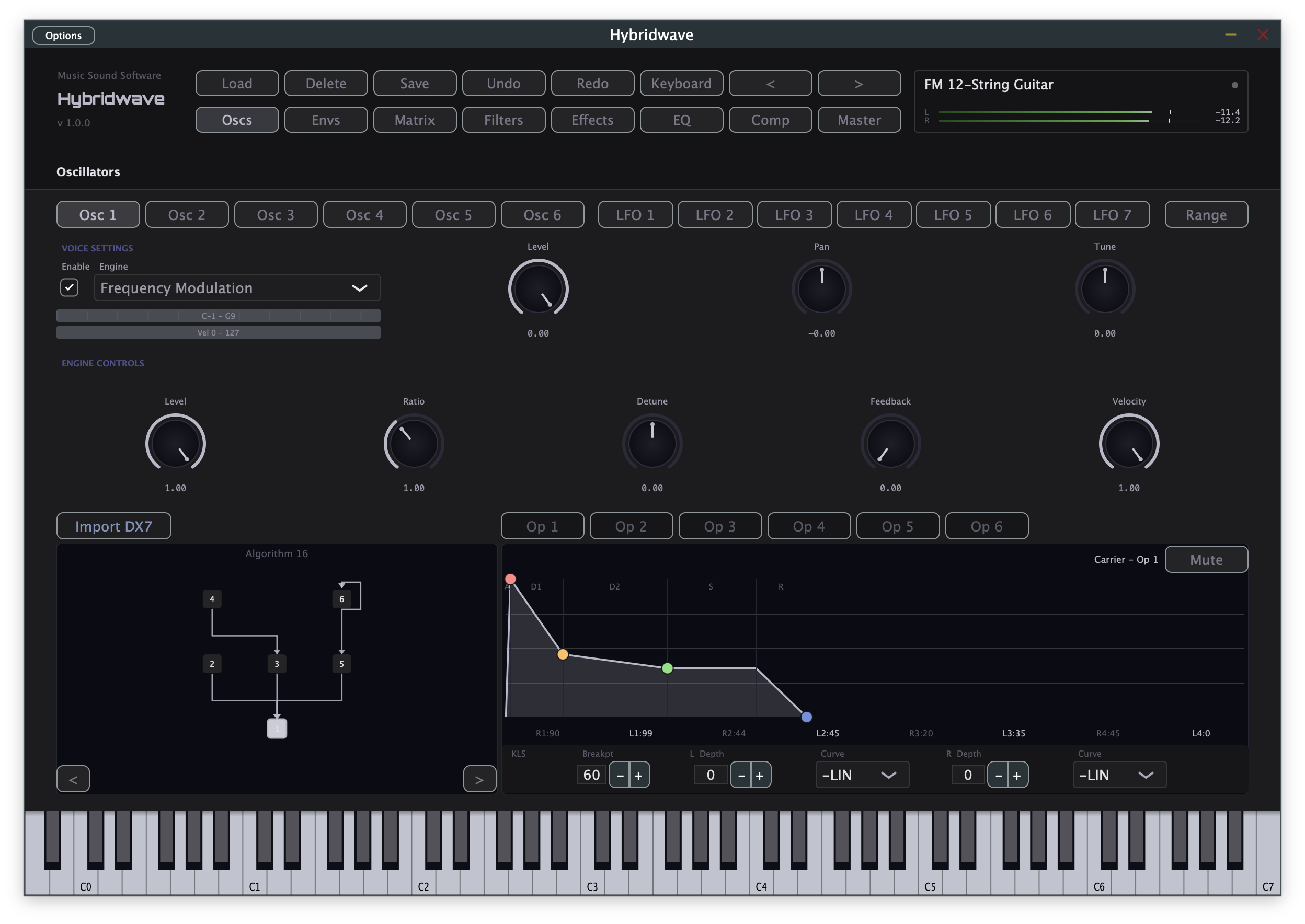
6-operator, 32-algorithm DX7-compatible engine with per-operator envelopes, ratio, feedback, and SysEx import.
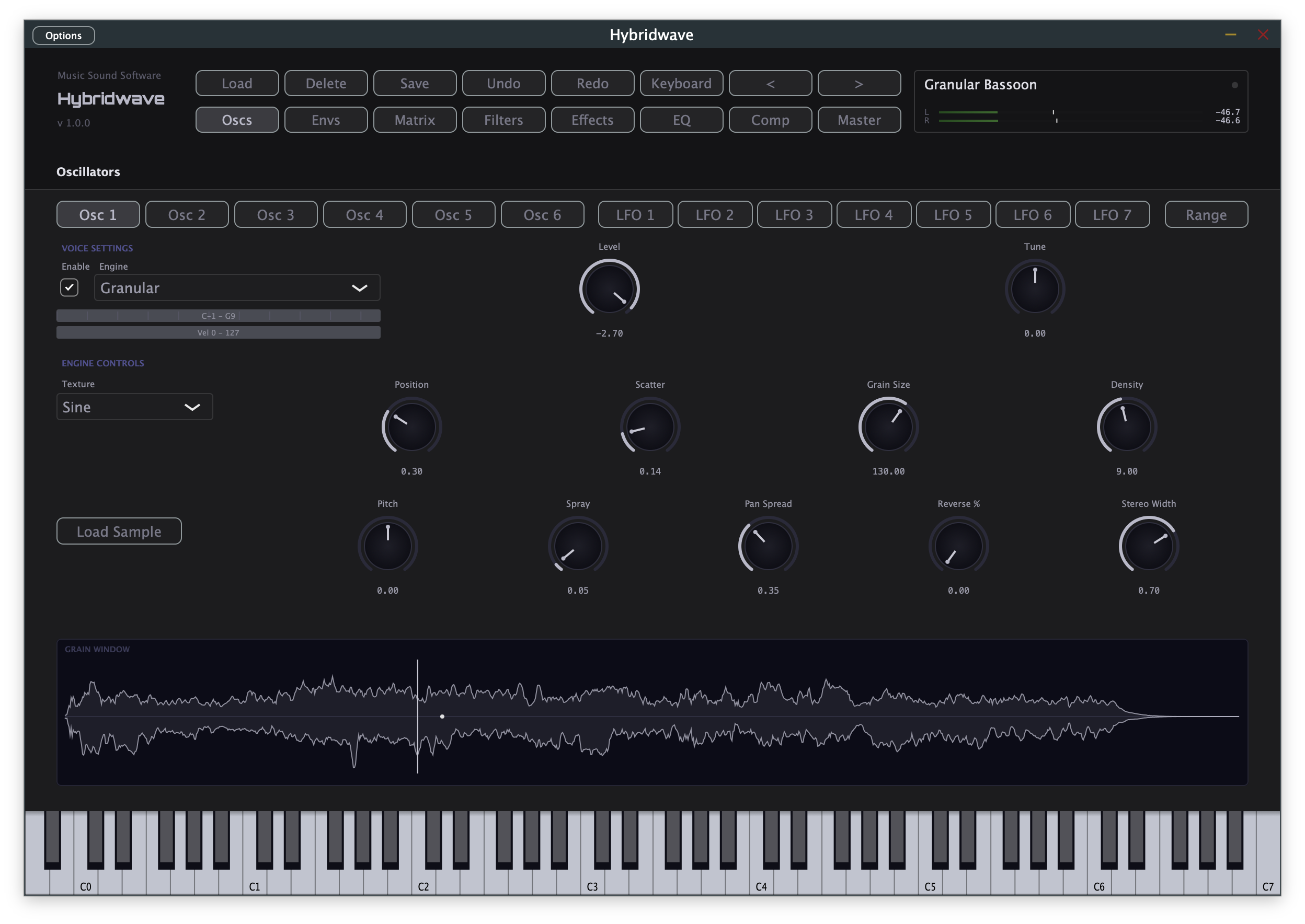
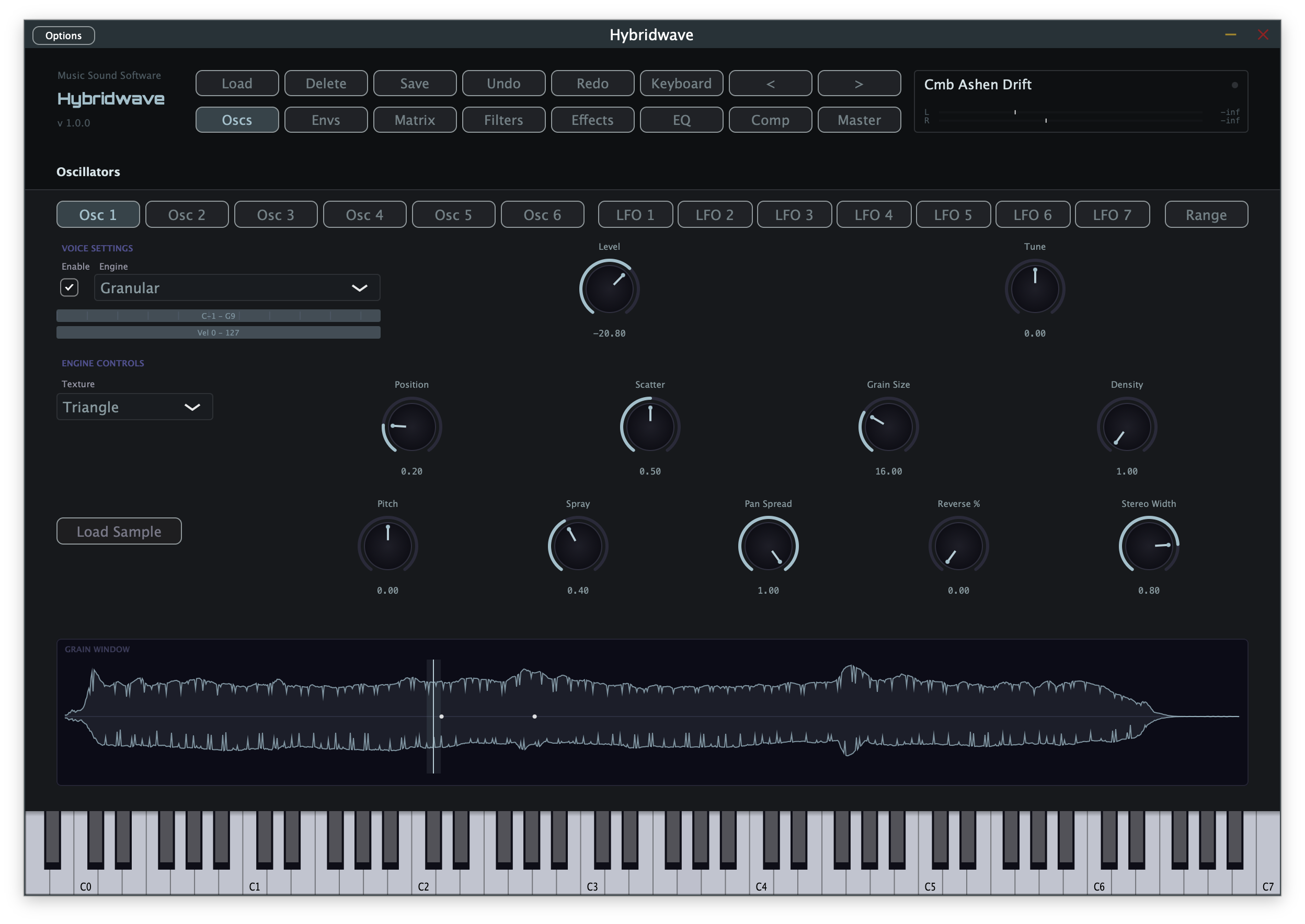
Full grain controls — position, size, density, scatter, spray, reverse — over loaded samples or synthesized textures.
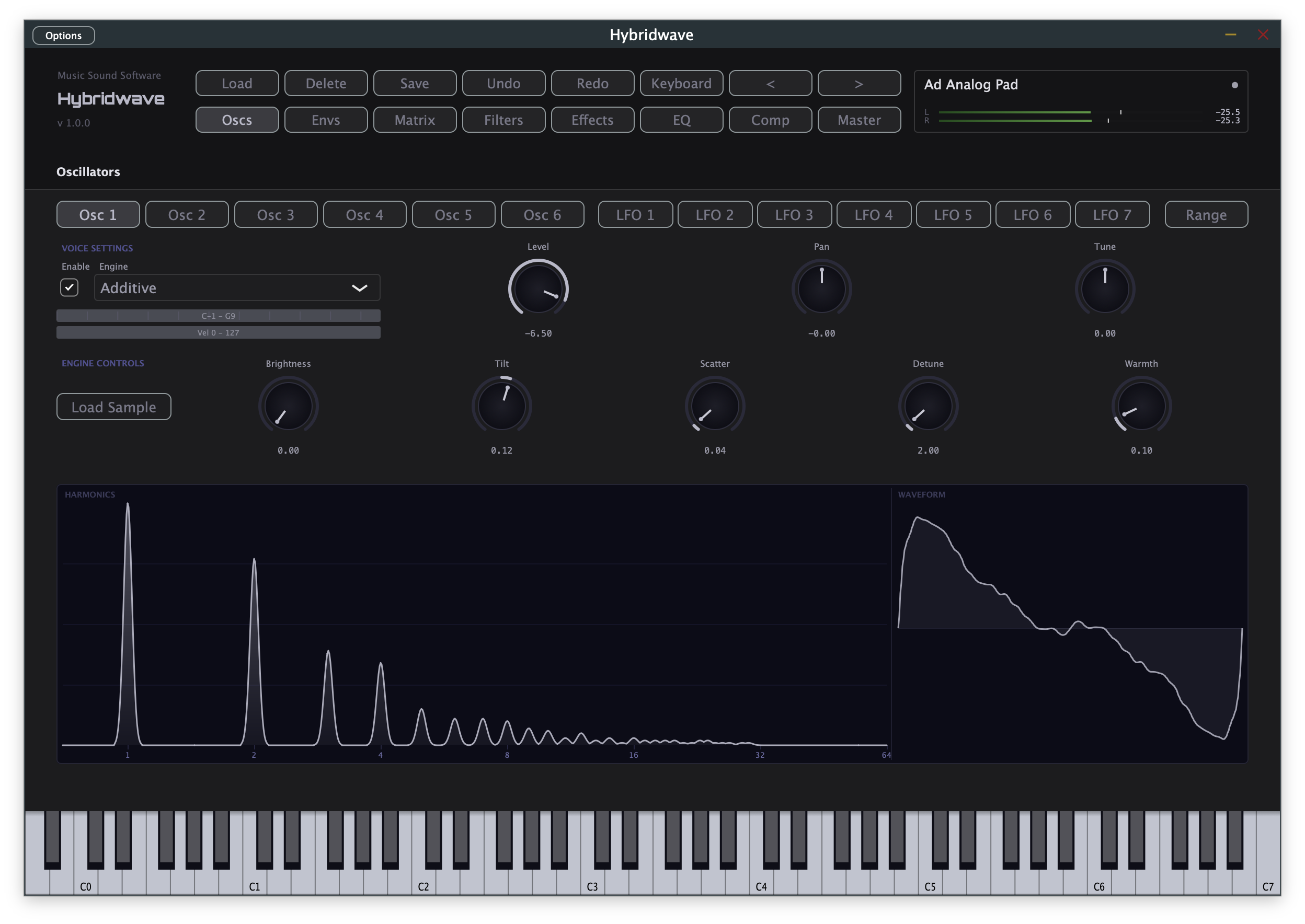
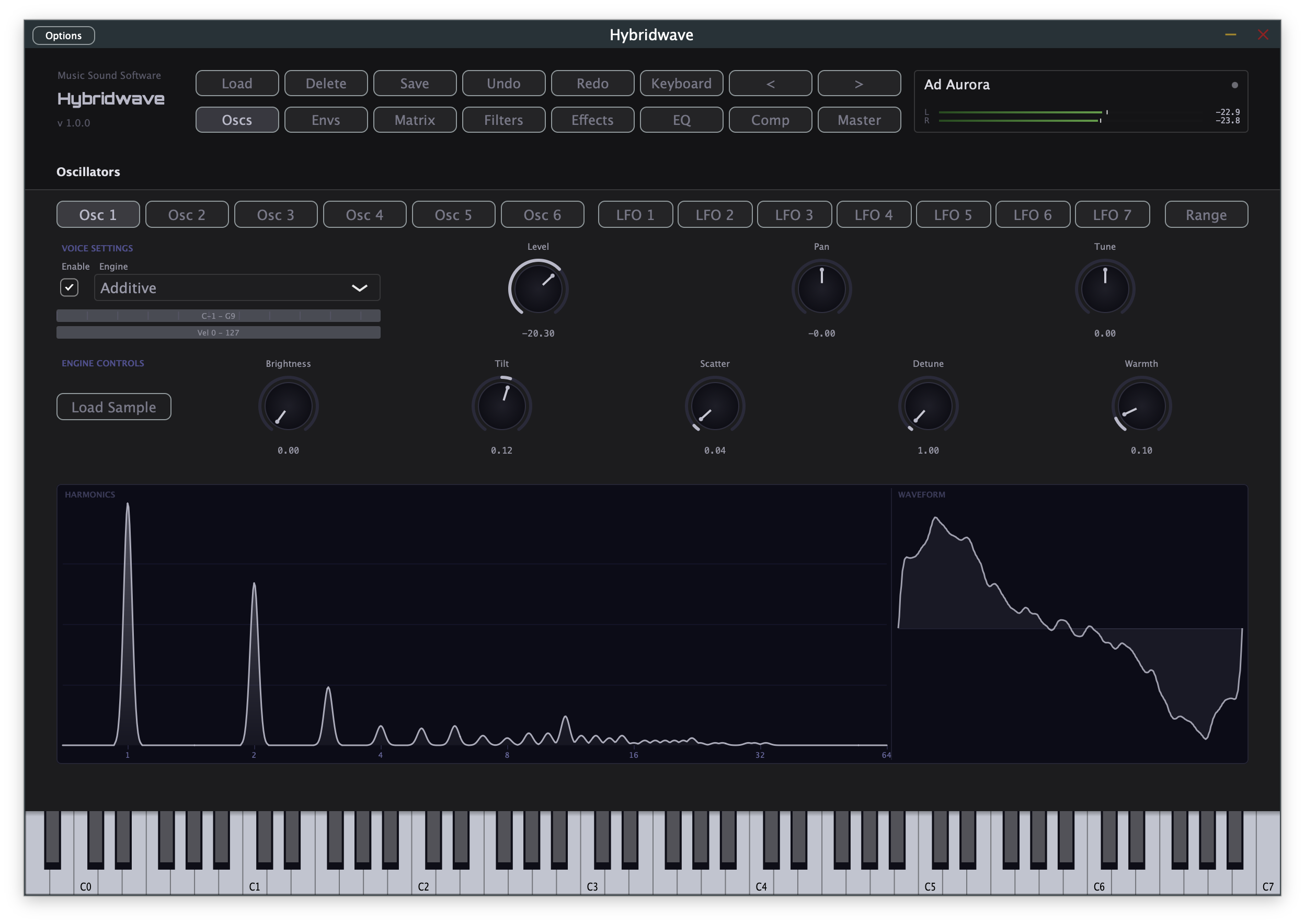
Up to 64 harmonics, hand-drawn or extracted from real audio via built-in FFT analysis.
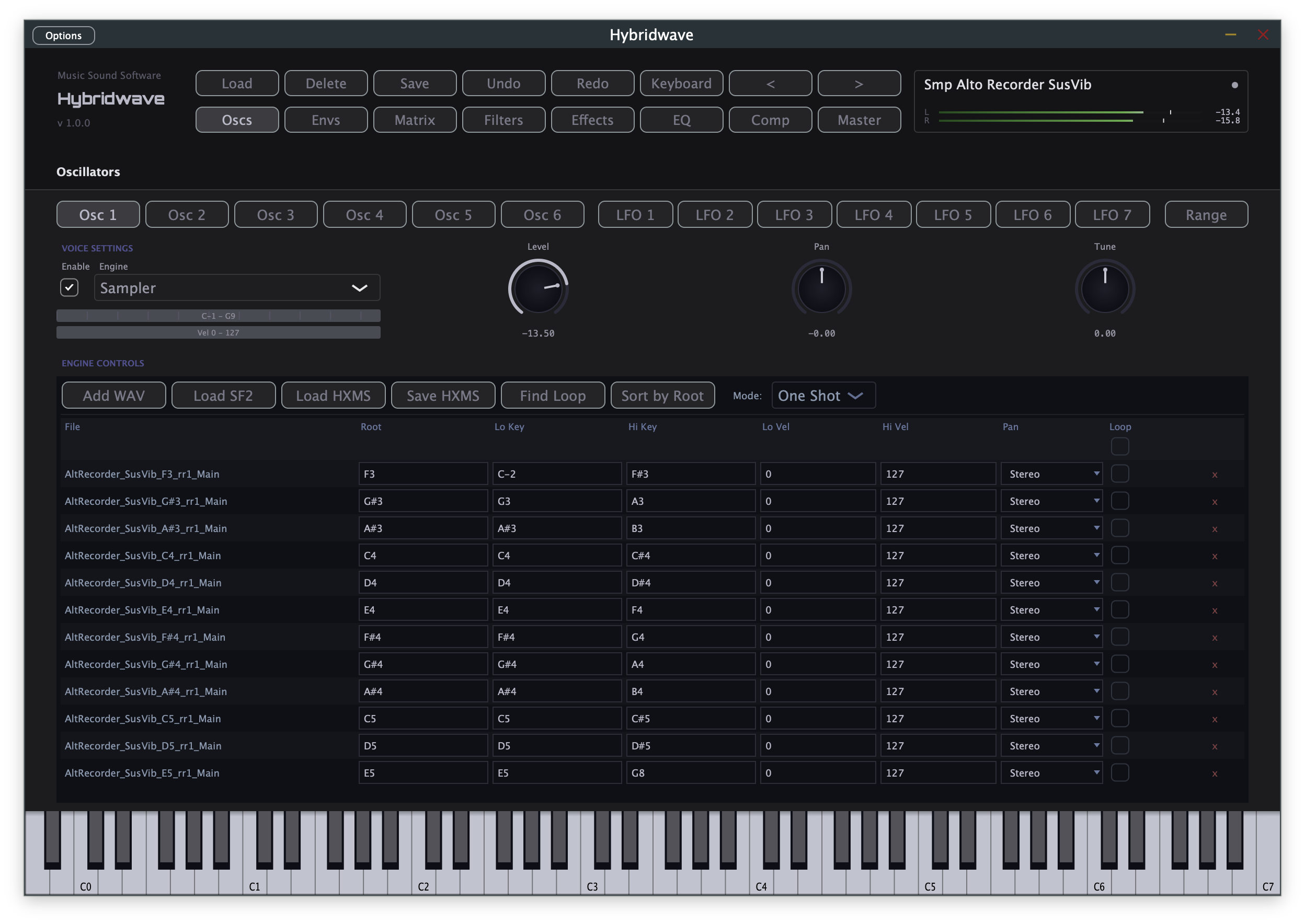
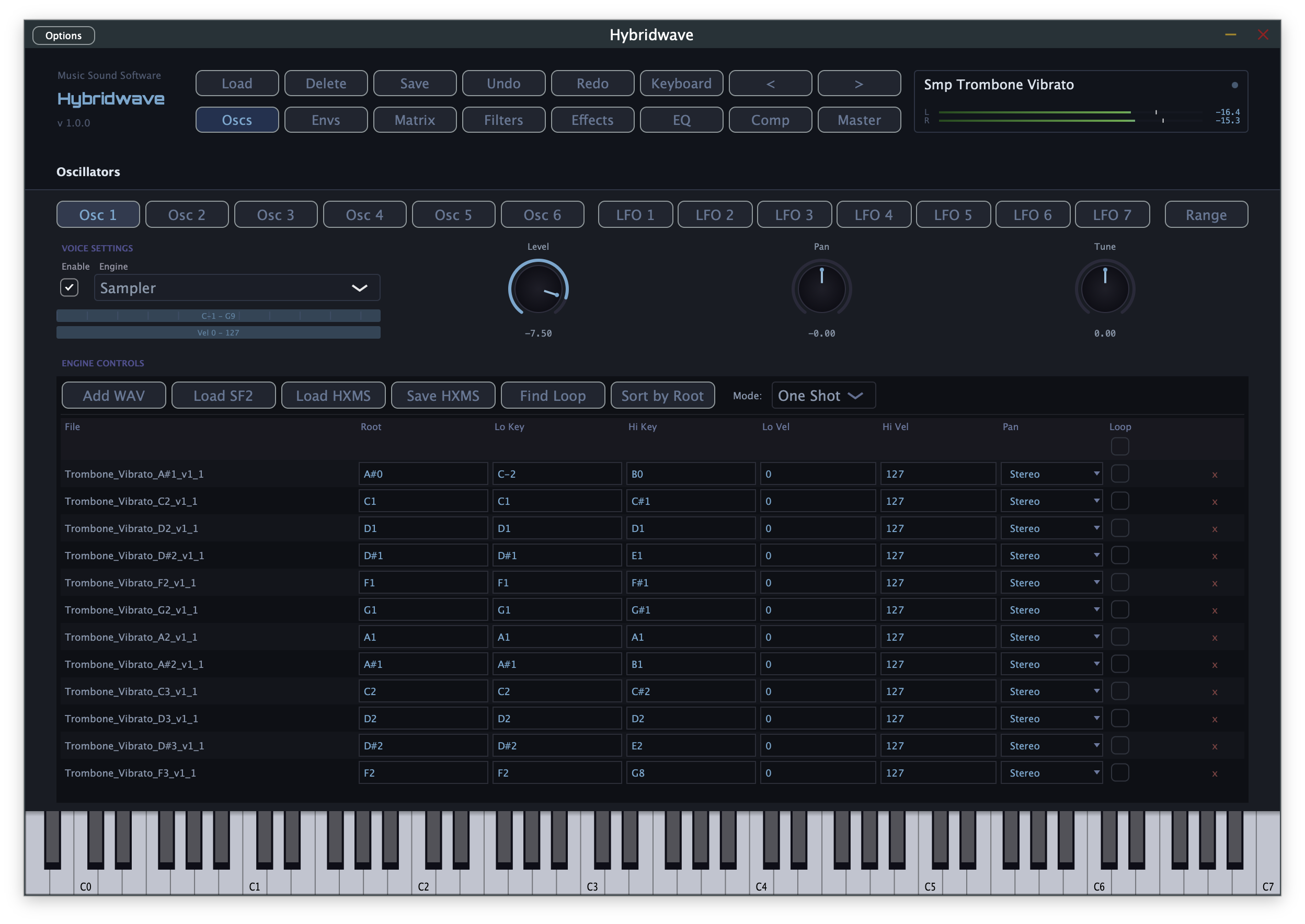
Multi-sample keymapping with WAV, SF2 SoundFont, and native HXMS import, velocity layering, and loop/ping-pong/one-shot playback.
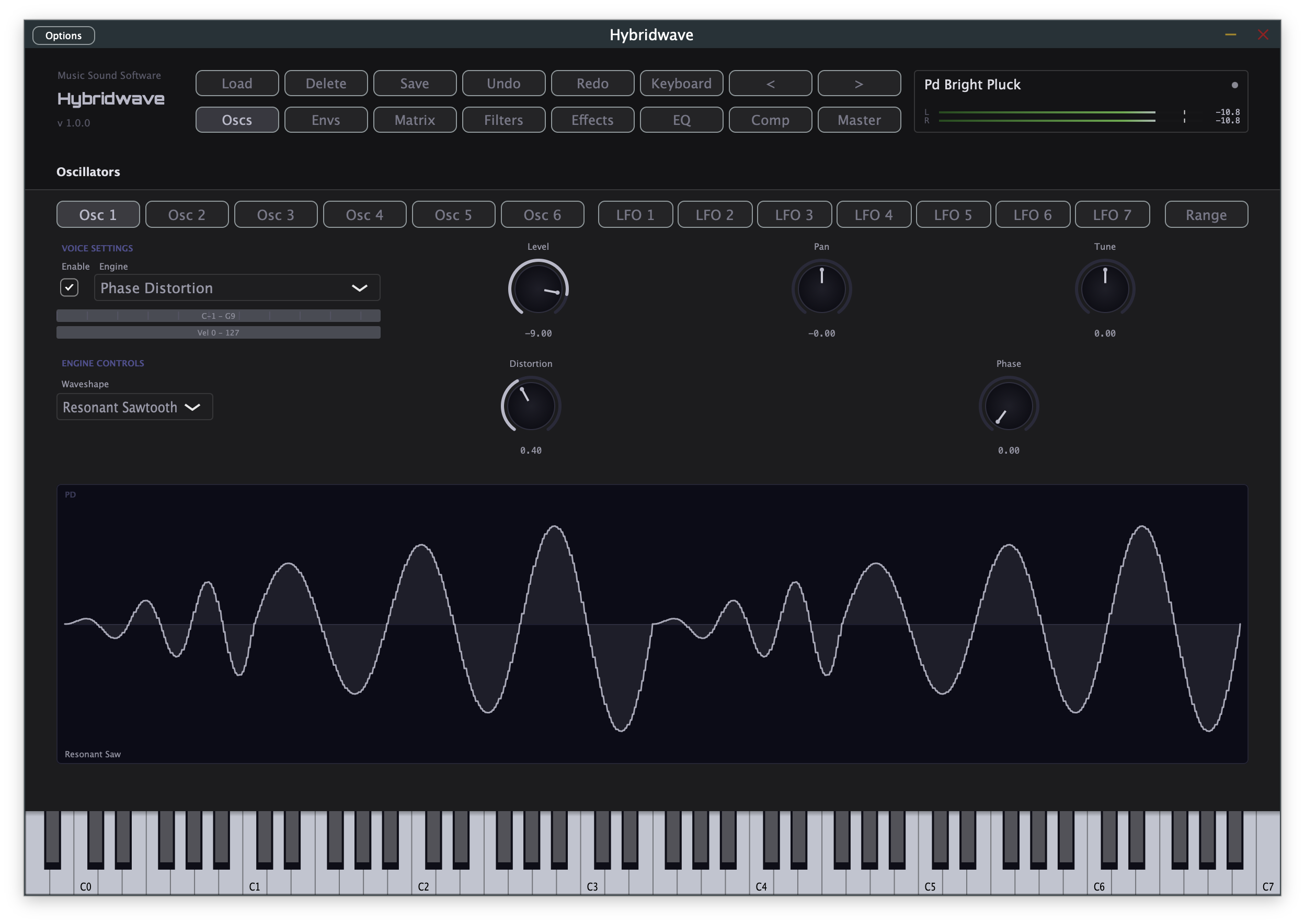
Classic Casio CZ-style synthesis — a single Distortion Amount control warps the rate a wavetable is read at, turning a plain sine into glassy plucks, snarling basses, and resonant, semi-vocal leads.
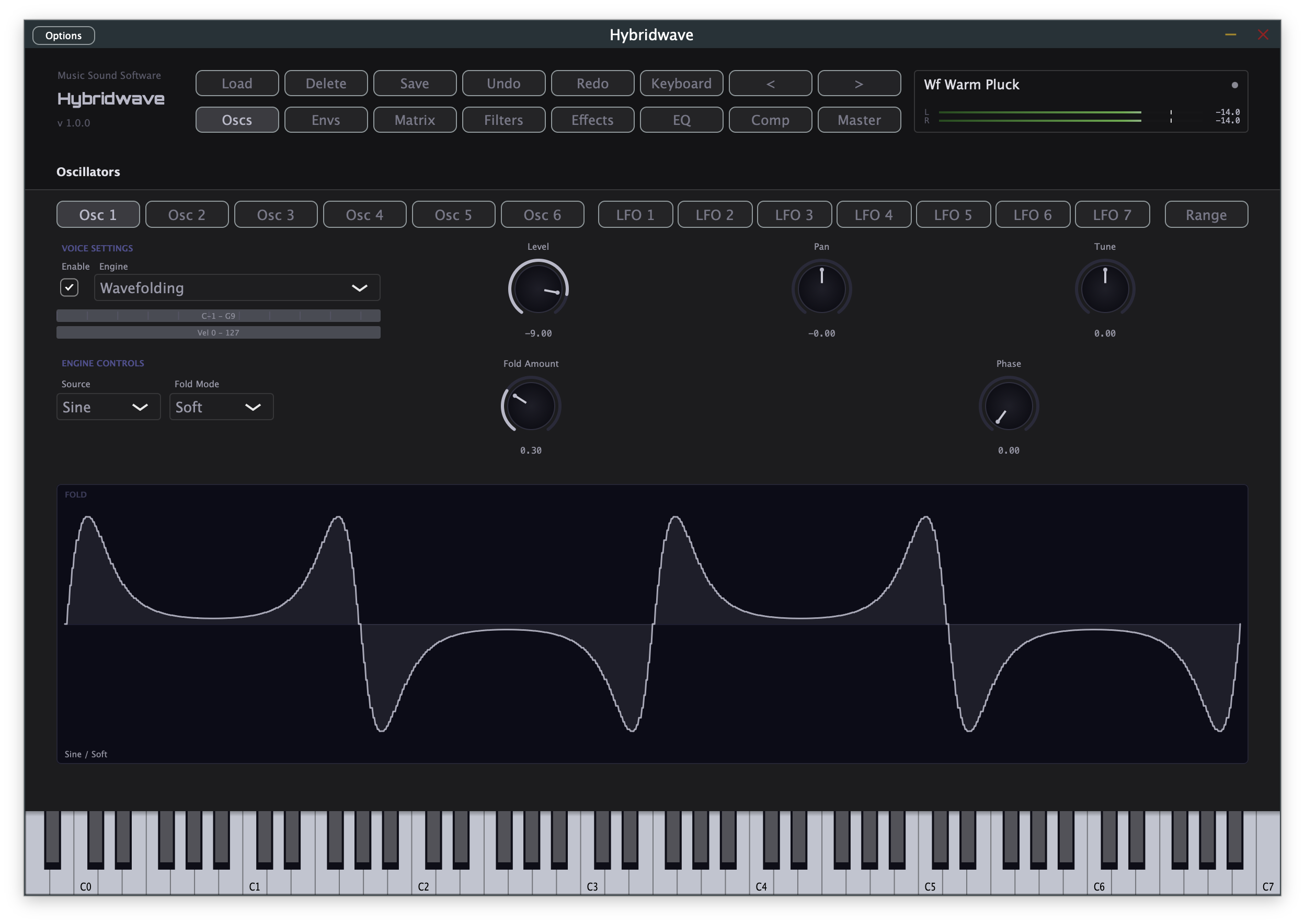
West Coast-style synthesis — a simple waveform is progressively folded back on itself to generate rich, dynamic harmonic content, for expressive, dynamic timbres that respond to level and modulation.
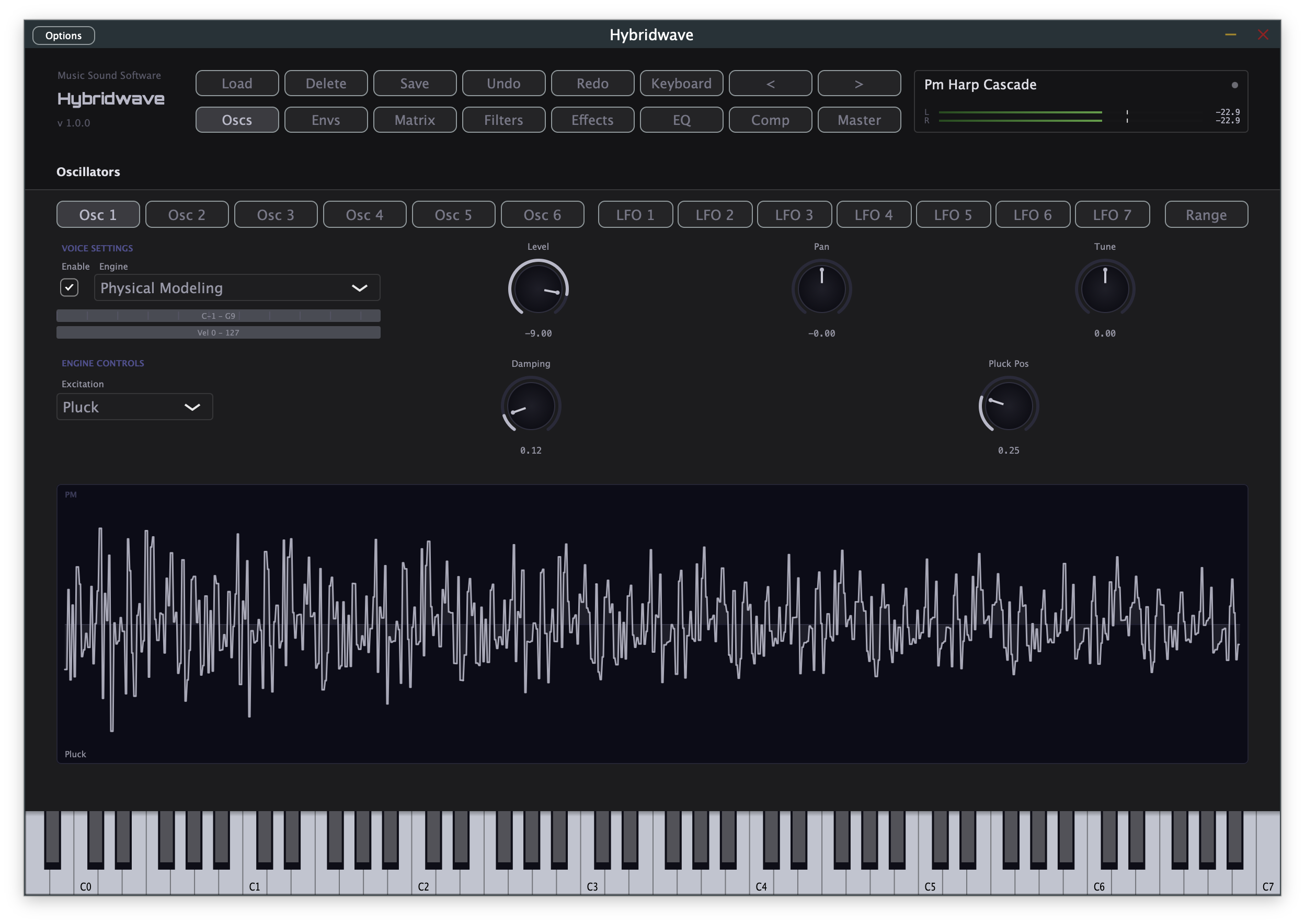
Karplus-Strong string synthesis — an excited, decaying delay line models the physical behaviour of a plucked or struck string, for naturally evolving plucks, mallets, and percussive tones.
Want a DX7-style FM bell layered under a granular texture pad, with a physically-modeled plucked string that only kicks in when you play hard? That's one Hybridwave preset, not three separate plugins fighting for CPU.
Click any image to enlarge.
Preset demos across Hybridwave's engines, plus multi-engine blends that combine two or more engines in a single patch.
Demos were created using Apple MIDI loops and session musicians in Apple Logic Pro. Some presets draw on Hybridwave's built-in 10GB sample library, sourced from VSCO-2-CE, VCSL, and AKWF-FREE (all CC0 / free-use) plus original Music Sound Software recordings — see full credits below.
A full mixing console built into the instrument itself.
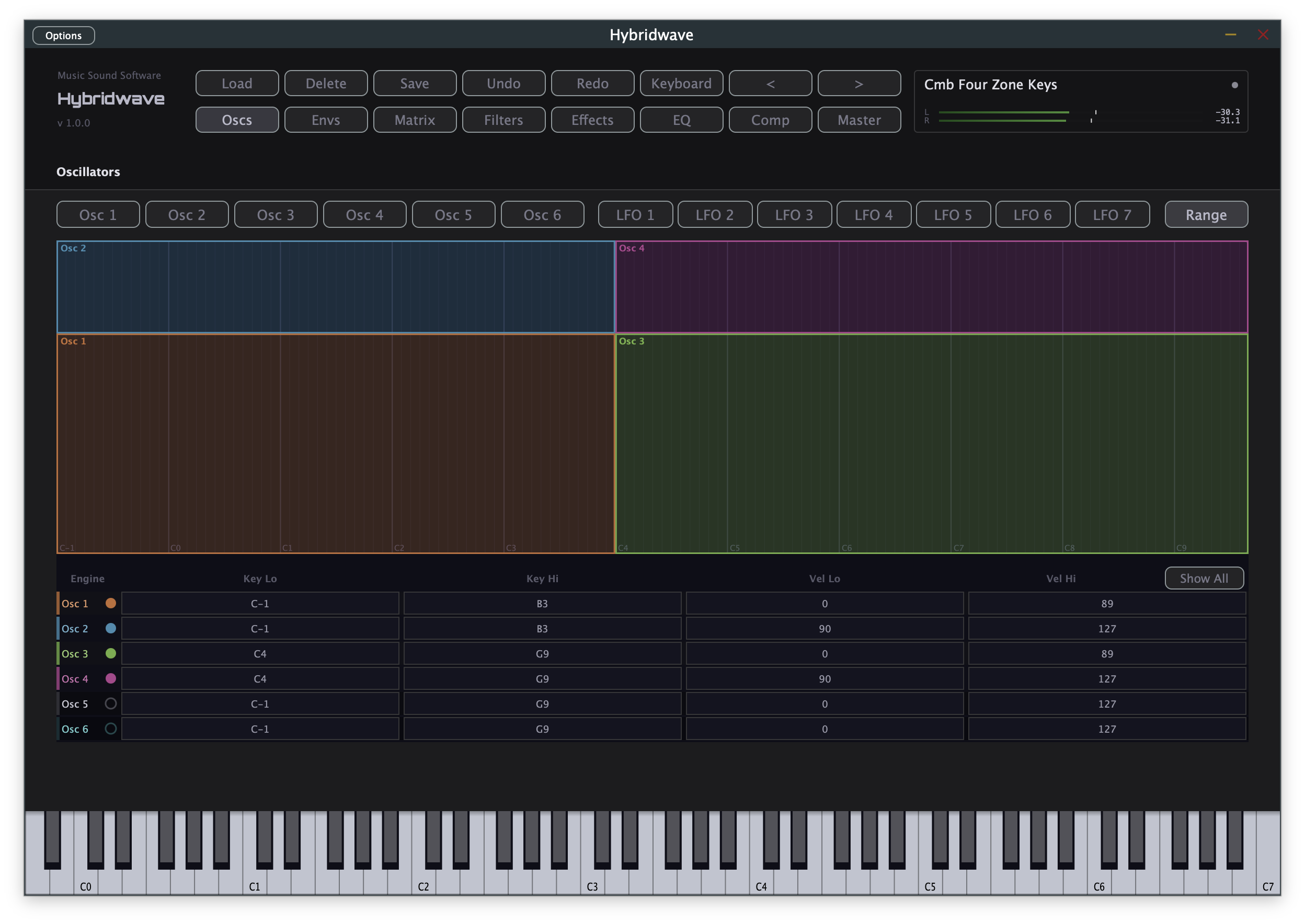
Each of the six slots is independent, with its own Engine dropdown, Level, Pan, and Tune, plus its own key range and velocity range — build splits and layers between any combination of engines.
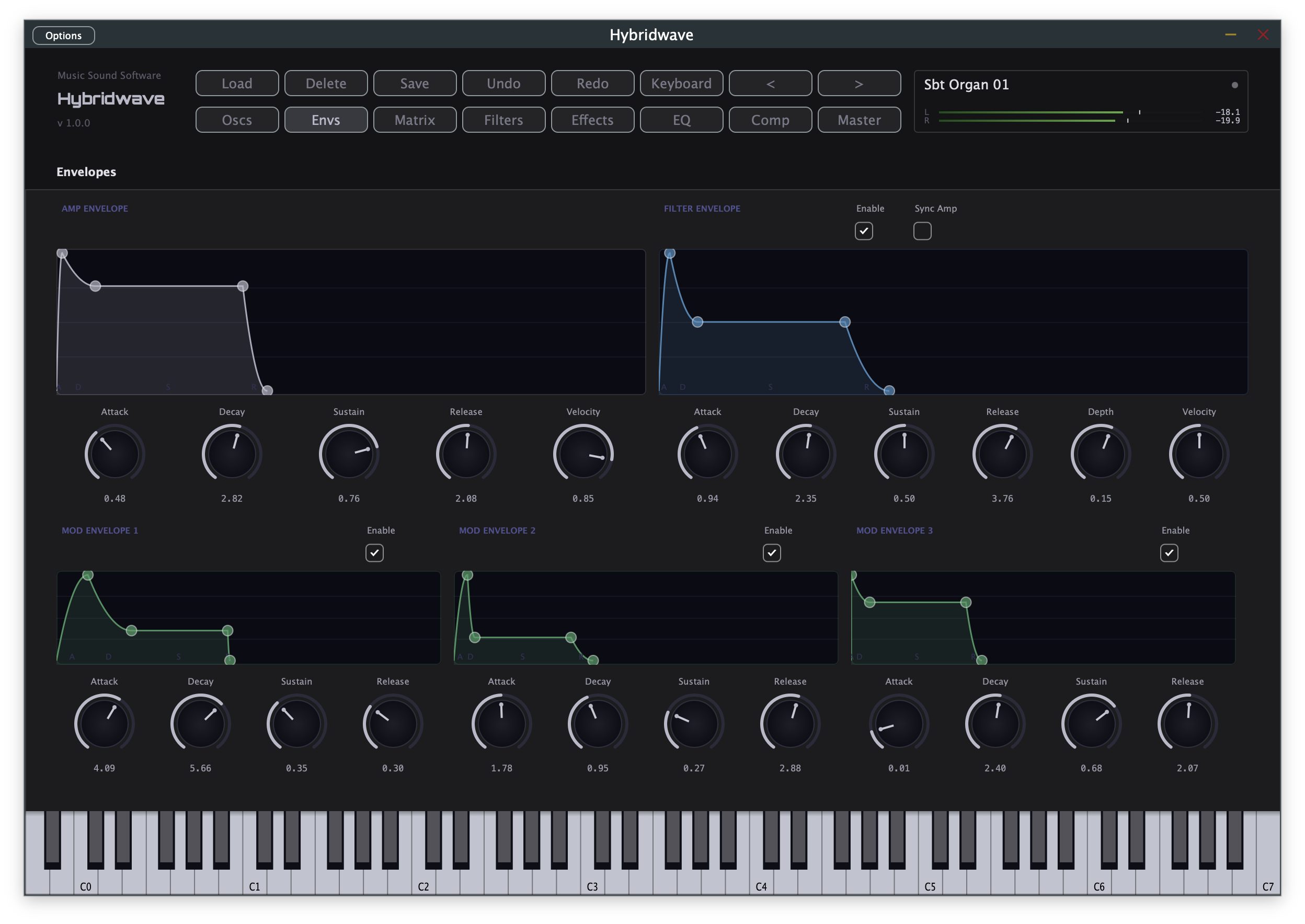
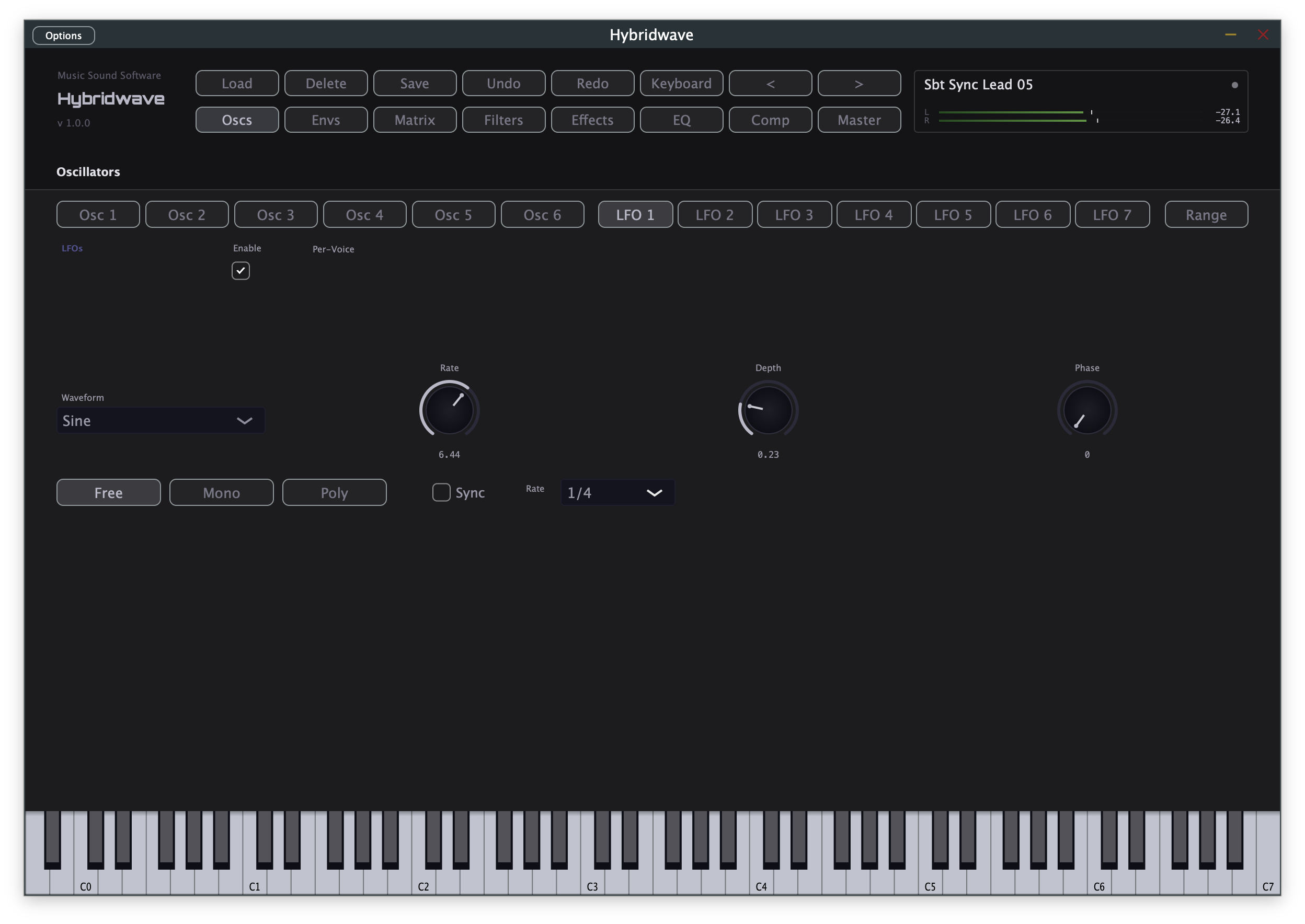
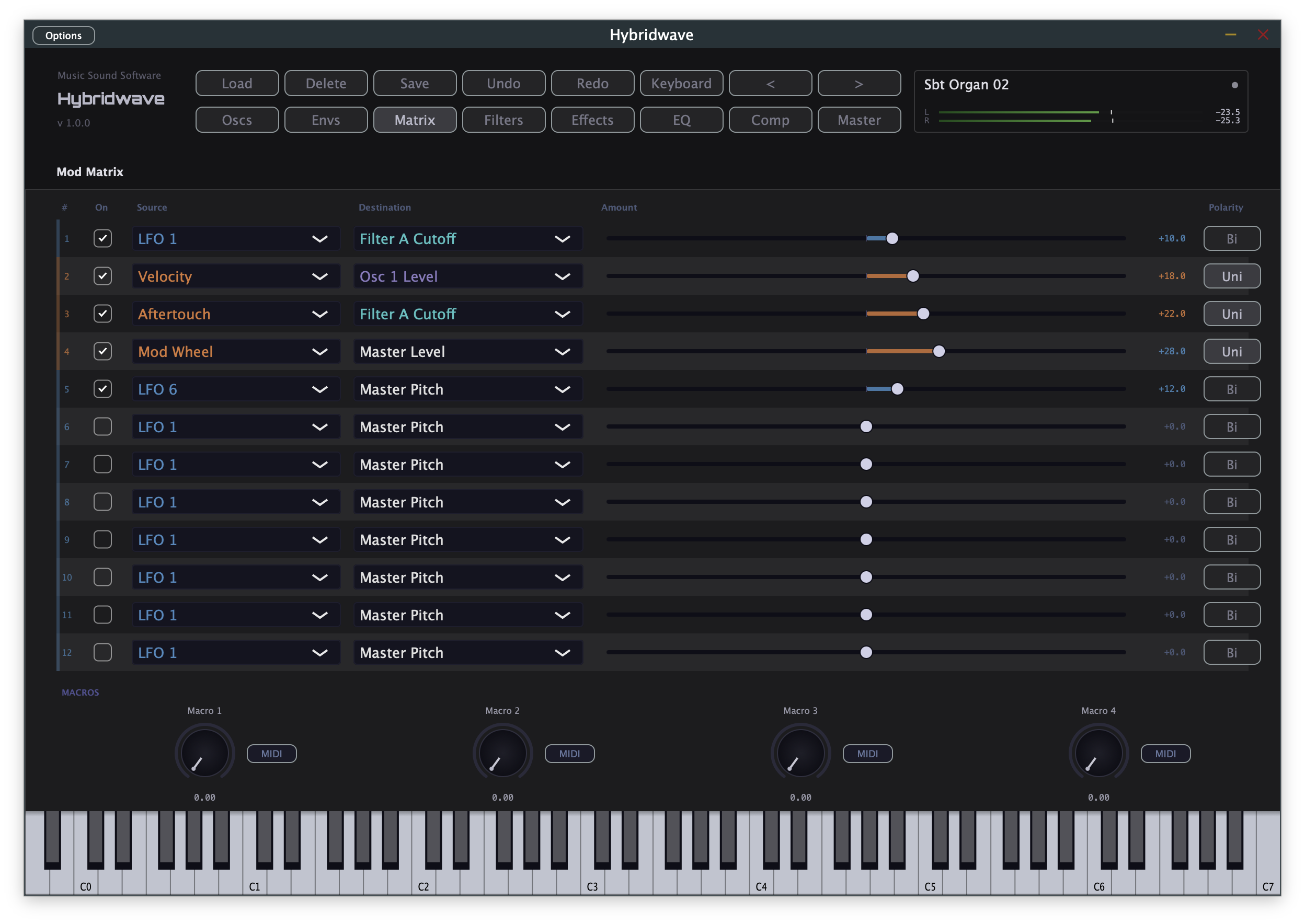
7 LFOs (free-running, mono, or poly retrigger, tempo-syncable), dedicated Amp and Filter envelopes, 3 freely assignable Mod Envelopes, and a 12-slot mod matrix with around 70 destinations.
Route a Macro to whatever you want it to control, then MIDI-learn it to an external CC or hardware knob — an easy way to expose one meaningful performance control that drives several parameters underneath.
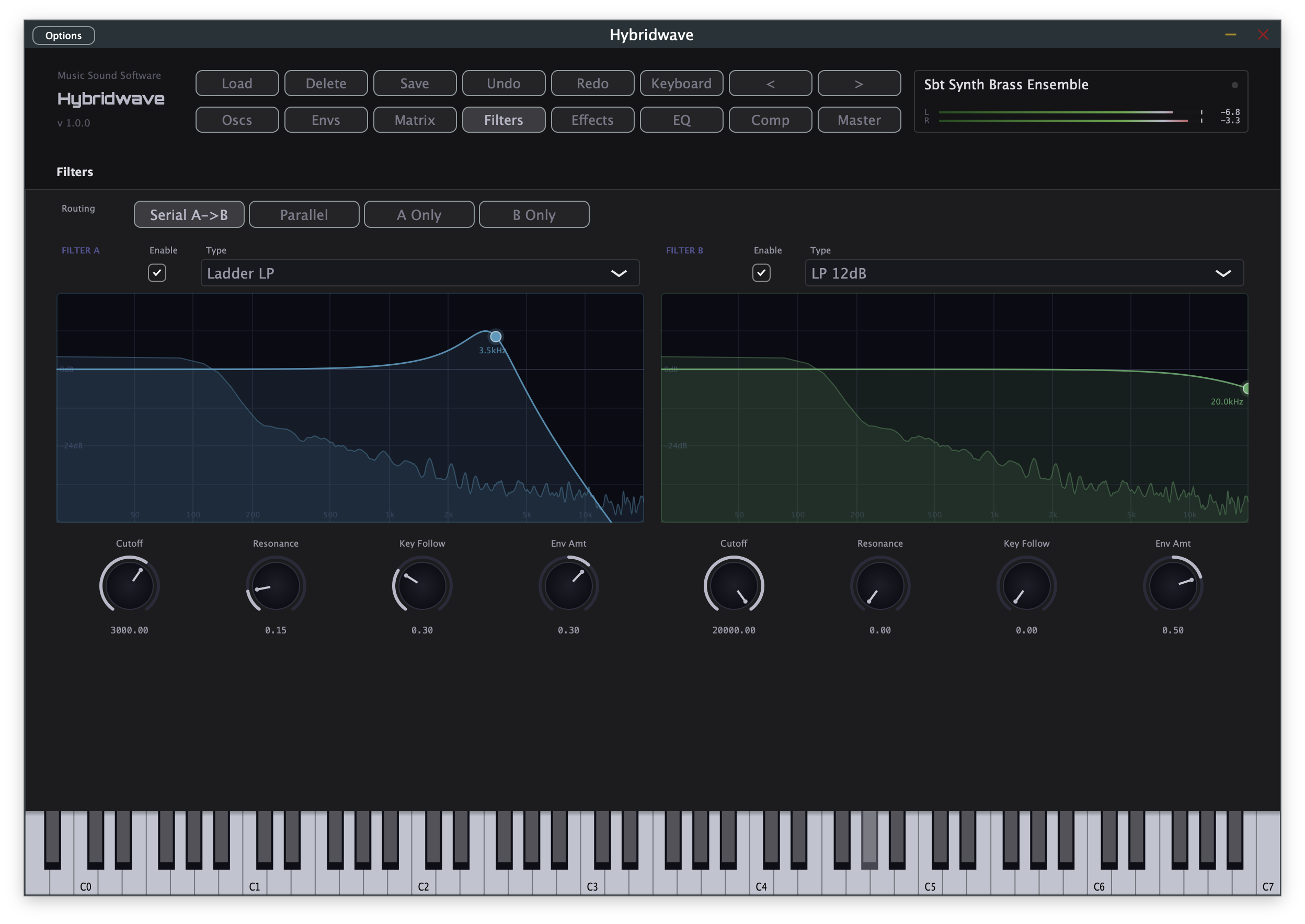
Filter A and B in serial, parallel, or solo routing, across LP/HP 12dB & 24dB, Band Pass, Notch, Peak, Ladder LP/HP, Formant, Comb, and a Waveshaper — with a live spectrum overlay.
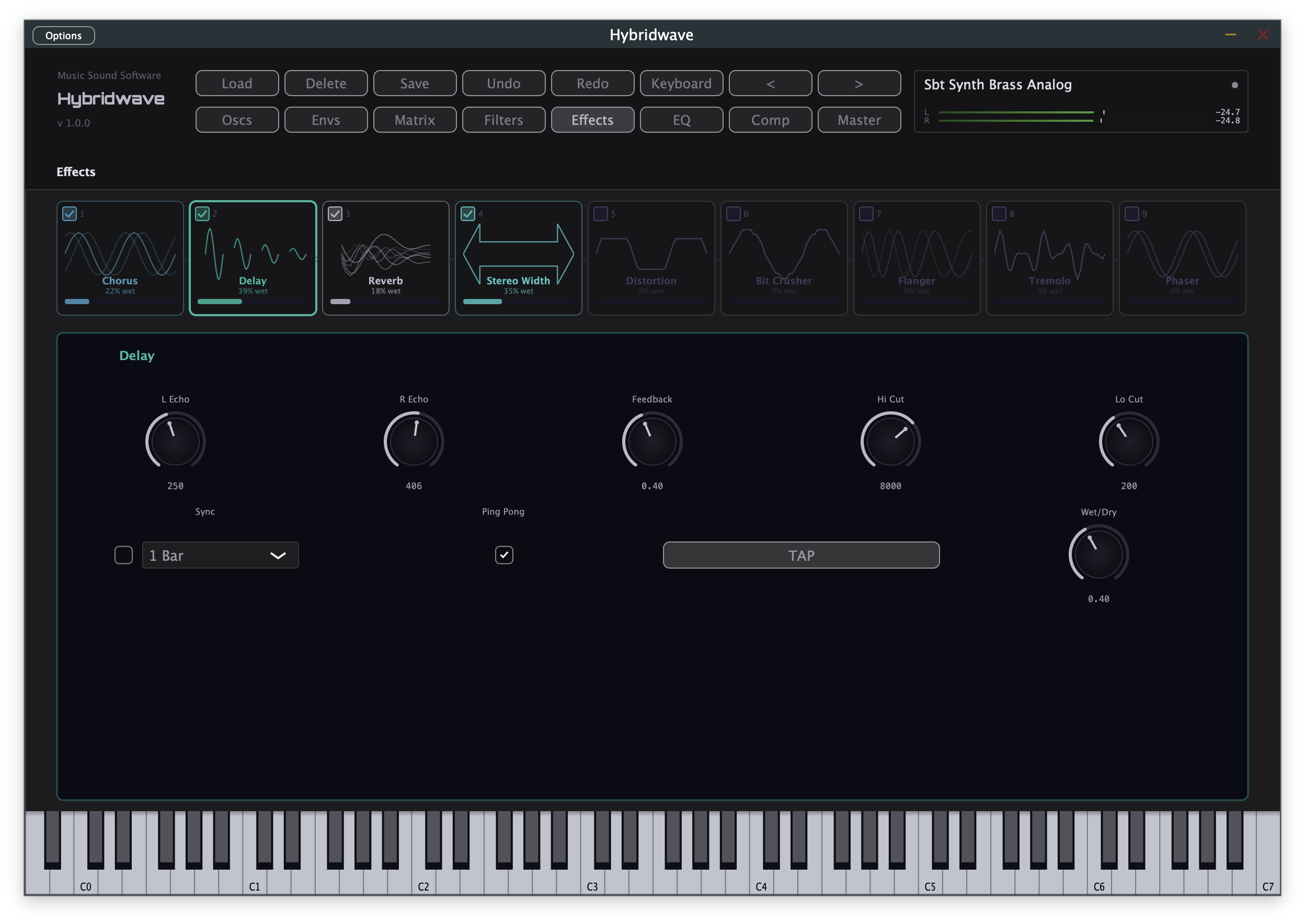
Distortion, Phaser, Chorus, Delay, Reverb, Bit Crusher, Flanger, Tremolo, and Stereo Width — drag to reorder, each with its own bypass and wet/dry mix.
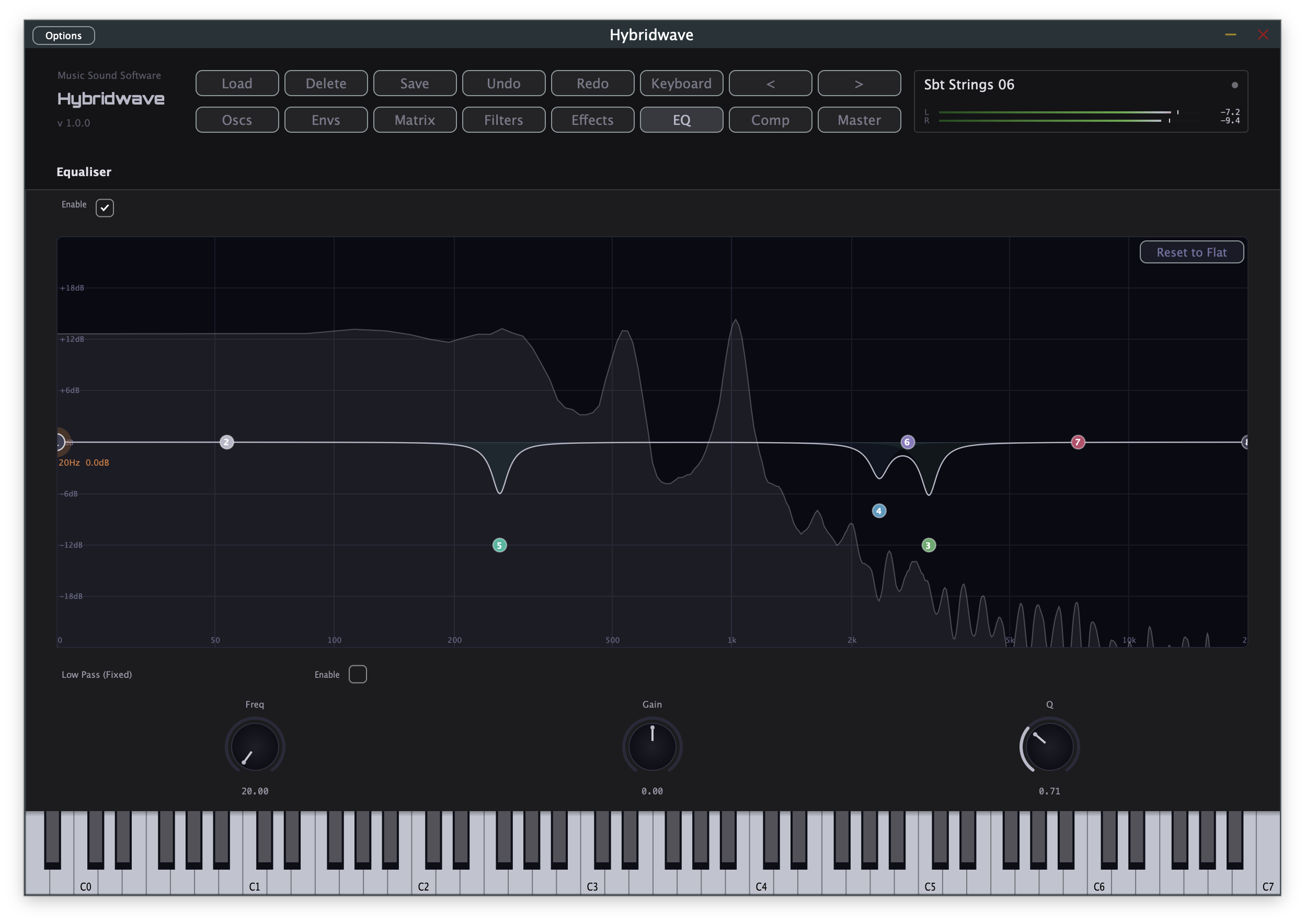
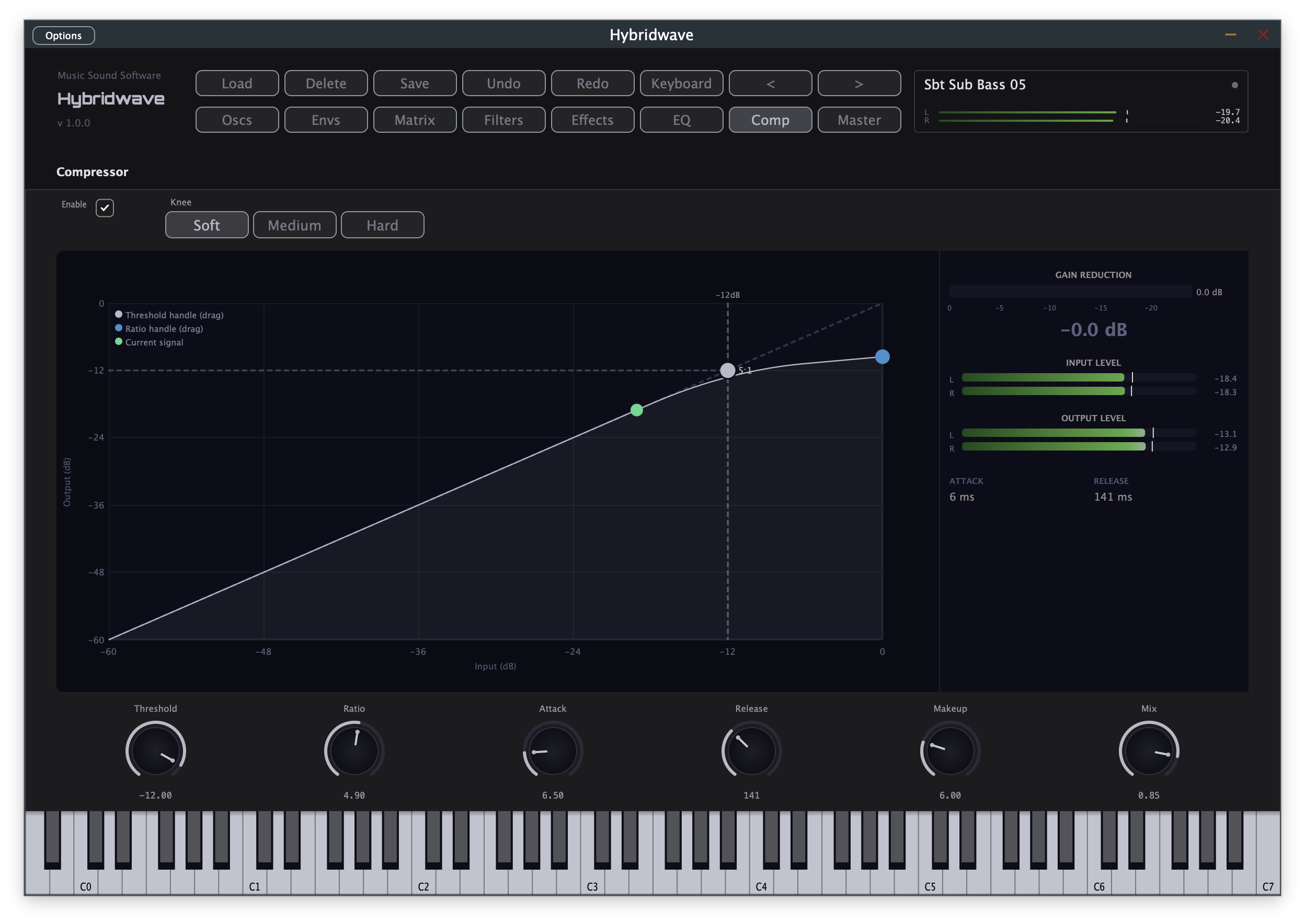
An 8-band parametric EQ with a live spectrum overlay, plus a mastering-style compressor with an interactive transfer curve and real-time gain reduction metering.
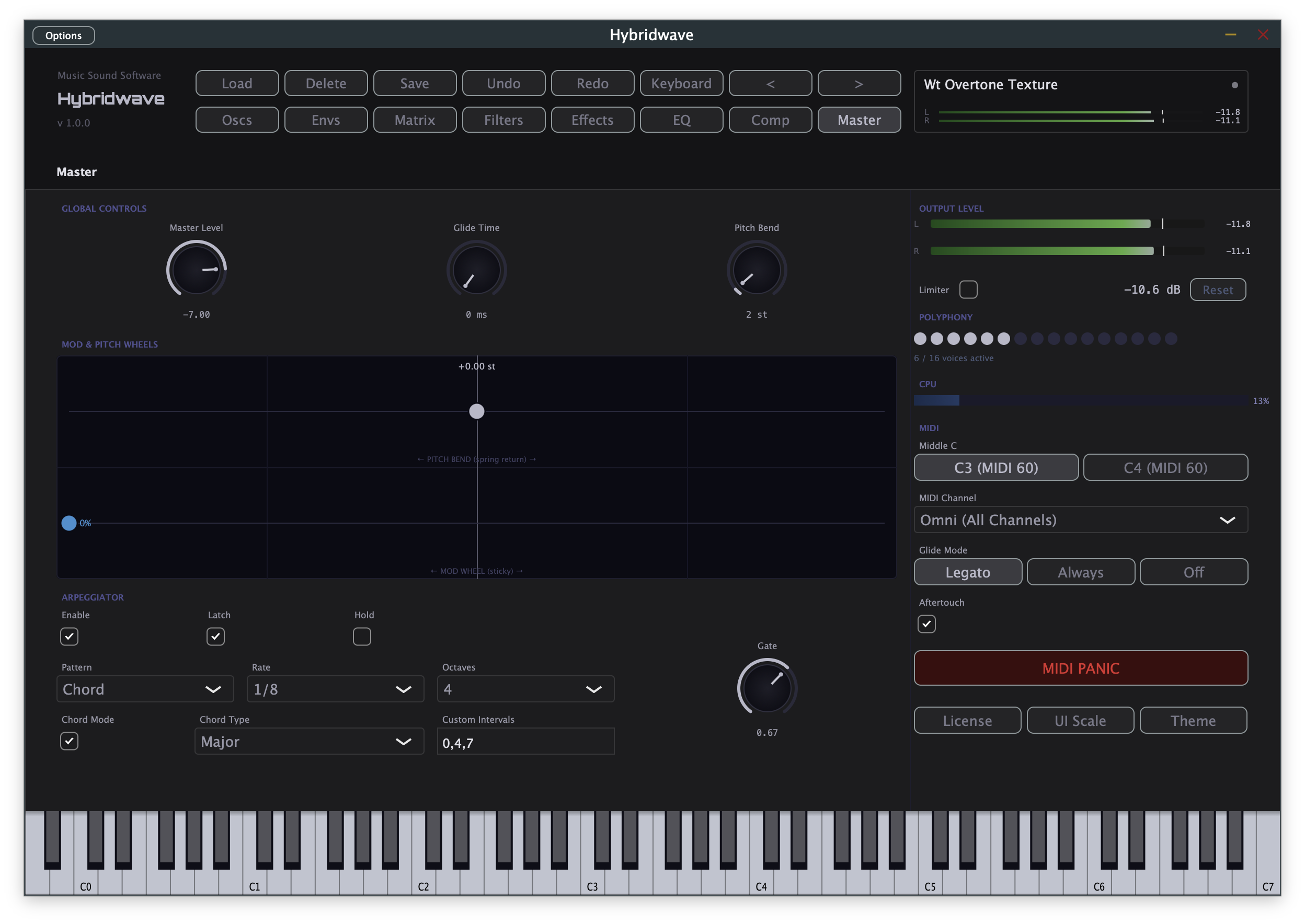
Pattern, chord, and custom-interval modes, with adjustable rate, octaves, and gate. Latch and Hold work independently for live performance.
Nine MIDI CCs are pre-mapped and labelled by default: CC2 Breath, CC7 Volume, CC10 Pan, CC11 Expression, CC71 Resonance, CC72 Release, CC73 Attack, CC74 Brightness, CC75 Decay.
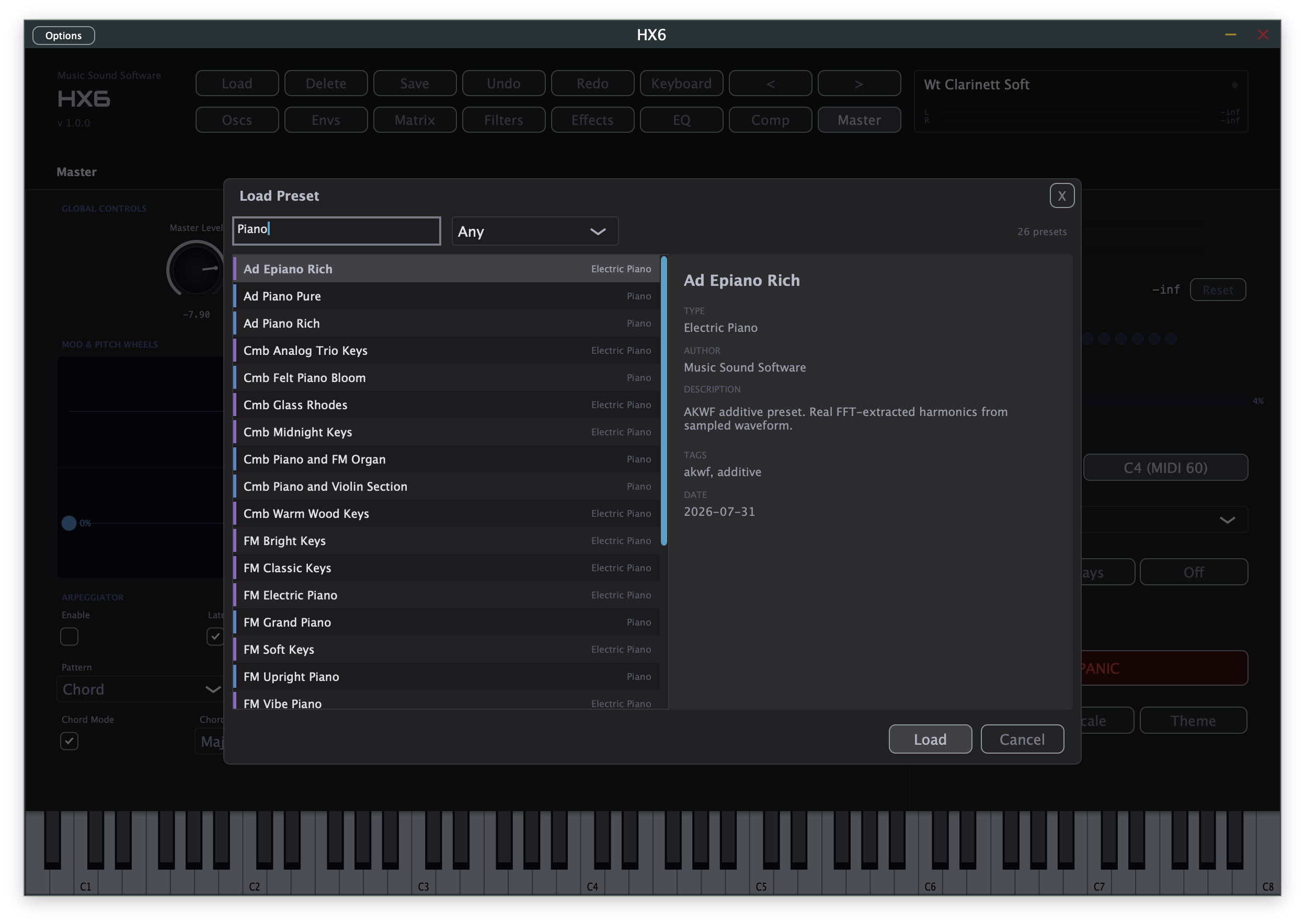
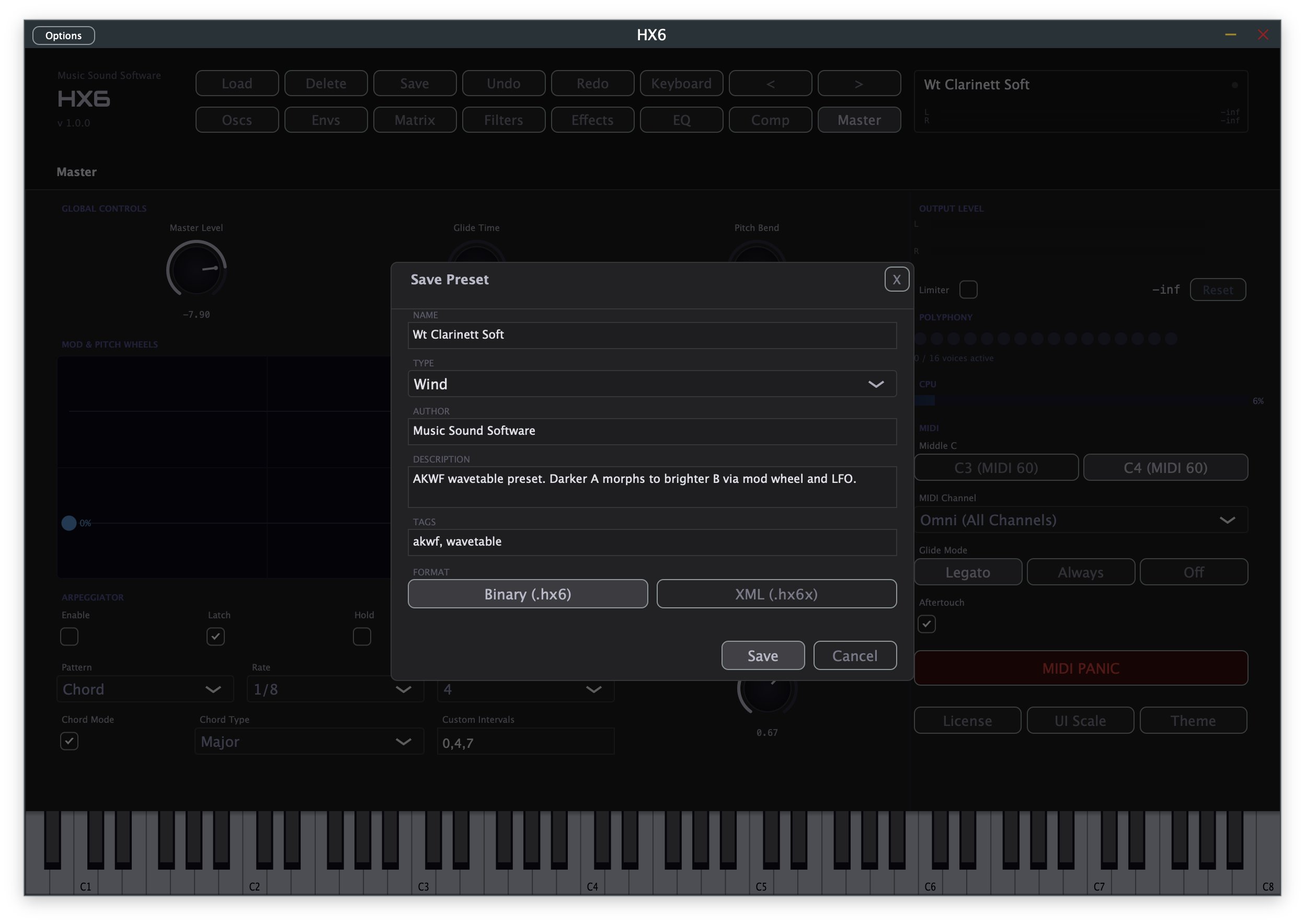
Search and filter by category and engine in the preset browser, with full metadata — type, author, description, tags, and date. Save your own in Hybridwave's native binary format or human-readable XML.
Steel, Graphite, Cobalt, Harbour, and Fjord — purely cosmetic, with no effect on sound. Your choice is remembered between sessions.
Play directly from the on-screen virtual keyboard — no MIDI controller needed. Connect a MIDI keyboard and it works automatically, with pitch bend, mod wheel, and aftertouch support.
The FM engine can read a SysEx bank or single-patch dump from a real DX7 and map it directly onto Hybridwave's operators, algorithm, and envelopes.
Hybridwave ships with real recorded instrument content powering the Sampler, Wavetable, and Additive engines out of the box — no separate sample pack to buy, no third-party licensing to sort out. Fully included in your purchase.
Hybridwave's built-in sample library draws on the following sources:
All third-party content is used under its respective open licenses; full attribution is included with the product documentation. Presets, patches, and any audio you create using Hybridwave — including this bundled content — are yours to use freely in your own commercial or personal work.
Every page of the plugin, walked through in the order sound flows through it — from choosing an engine to the final compressor stage.
Hybridwave is available now for macOS (Apple Silicon) as VST3, AU, and Standalone. A Windows version is coming soon — Windows purchasers will be notified when it's available. Hybridwave is not currently compatible with Intel-based Macs, iOS, Android, Linux, or ChromeOS.